

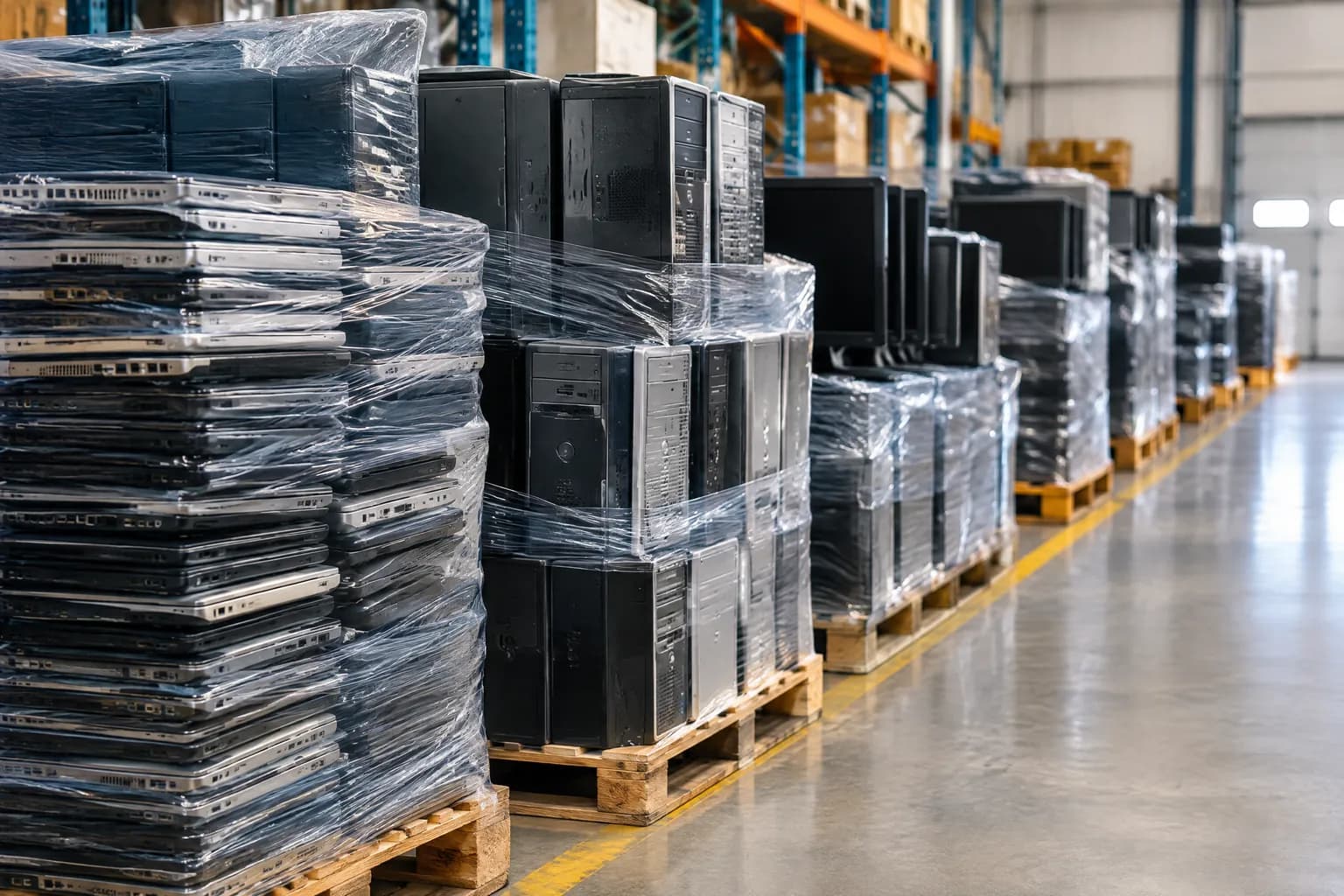
A clearance or bulk IT lot is a quantity of surplus, end-of-line, returned or decommissioned equipment sold as one parcel and priced as a whole on the strength of its manifest. That makes the manifest, the test coverage, the grade mix and the data-sanitisation evidence more important than any single unit, and it is why experienced lot buyers read the spreadsheet before they look at the price.
Where do IT lots come from?
- Distributor or retailer overstock and end-of-line models.
- Customer returns, including open-box and lightly used units.
- Corporate lease returns and fleet refreshes.
- Data-centre decommissioning: servers, storage and networking.
- IT asset disposition (ITAD) channels that collect, wipe and grade retired equipment.
Each source has a typical profile. Overstock is new but may be older models; lease returns are consistent business models with mixed cosmetic grades; decommissioned data-centre gear is often sold with drives removed. Knowing the source tells you which questions to ask first.
How do you read a manifest?
| Field | What to look for |
|---|---|
| Model and part number | Exact models, not just families; check the generation |
| Serial number | Present for every unit, so the lot can be verified and warranty status checked |
| Processor, memory, storage | Listed per unit rather than 'mixed'; watch for 'no HDD' or 'no SSD' entries |
| Grade | Per unit, against a definition the supplier can send you |
| Test status | Tested, partly tested or untested, and what the test covered |
| Battery | Health percentage or cycle count for laptops and tablets |
| Notes | Locks, missing parts, cracked screens, keyboard layout, missing chargers |
What does tested really mean?
'Tested' means little until you know the test. A power-on check confirms a device starts; a full functional test exercises the screen, keyboard, ports, battery, Wi-Fi and storage. Untested lots can still be good buys for refurbishers with their own workshop, but they should be valued as untested. If a manifest does not state test coverage, ask, and treat silence as an answer.
Which risks hide in lots?
- Security locks: BIOS passwords, activation locks, anti-theft persistence and device-management enrolment.
- Missing parts: drives, chargers, batteries, rails or memory removed before sale.
- Mixed localisation: several keyboard layouts and plug types in one lot.
- Battery wear: laptops that pass a function test but hold little charge.
- Data: drives that were never wiped, a legal and reputational risk for the buyer as well as the seller.
- Supportability: models near or past the end of vendor support.
How are lots priced?
Lots are usually priced per unit across the whole parcel, or as one figure for everything on the manifest. The price reflects the weakest units as much as the strongest, the test coverage, how complete the units are and how quickly the seller needs to clear space. Because the price is for the parcel, the room for negotiation depends on how many other buyers are reviewing the same manifest.
What about lots of servers and networking gear?
Data-centre lots bring their own checks: whether drives and memory are included, whether power supplies and rails are present, whether switches have been reset and released from licensing accounts, and whether the models still receive firmware updates. A lot of servers without drives can still be good value, provided the price reflects the parts you will need to add.
Can you inspect a lot before paying?
Often, yes, and for any significant lot you should. An inspection can verify a sample against the manifest, check lock status and confirm that grade definitions are applied as stated. Lots move quickly, so agree the inspection window with the seller up front, and set out what happens if the sample does not match: a price adjustment, removal of failing units or the right to withdraw.
How does FC Trading handle clearance and bulk lots?
We broker lots that suppliers offer; we do not hold inventory, and nothing on this site describes a specific lot as available. When suppliers offer suitable lots, we share the manifests with registered buyers, put the questions above to the supplier, and pass on grading definitions, test reports and sanitisation evidence. You approve the lot in writing before any payment, and freight and documents are arranged as for any other order.
Who should buy lots, and who should not?
Lots suit resellers, refurbishers and repair shops with the skills to sort, repair and sell mixed equipment, and projects that can use a range of models. They suit buyers who need one exact model across every unit far less well; for them, a sourced-to-order quote is usually the better route, even if the unit price looks higher at first.
If you are new to lots, start with a smaller tested lot from a category you know, sell it through, and use what you learn about grade mix and failure rates to price the next one.
What should you do when a lot arrives?
Sort before you sell. Check counts and serials against the manifest, then separate units into ready to sell, needs work and parts. Record what you find against the manifest grades: that record is your evidence if the lot differs materially from its description, and your data for valuing the next lot from the same source.
Related reading


Leave a Comment
Your email address will not be published.