

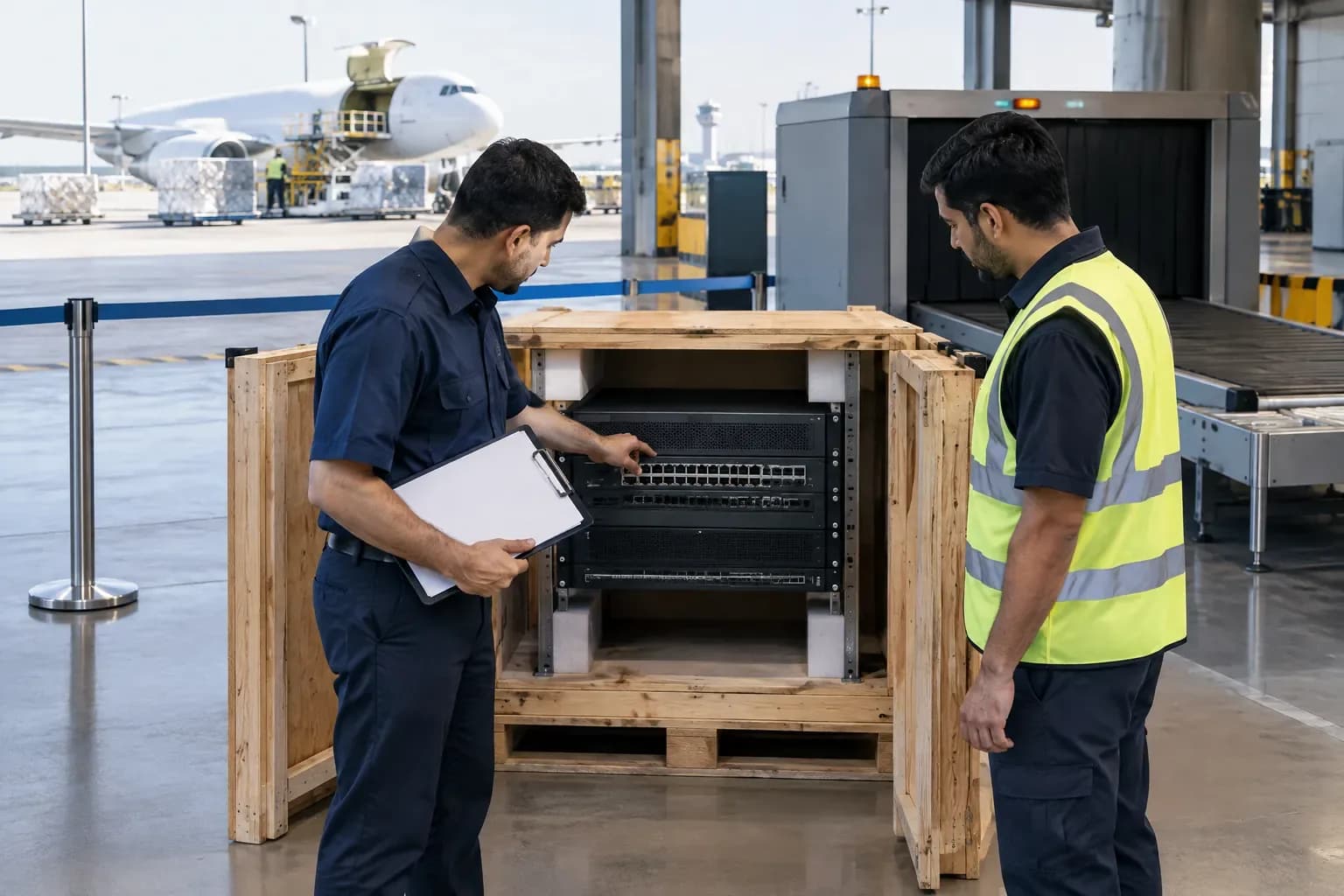
Everyday office IT rarely raises export-control questions, but every order should be screened against sanctions lists, and some items, such as certain encryption-capable security appliances and high-end GPUs, as well as some destinations and end users, need extra checks or cannot be supplied at all. This guide explains the difference between sanctions and export controls, what triggers extra questions and what we ask of buyers. It is general information, not legal advice.
Are sanctions and export controls the same thing?
No. Sanctions are about who and where: they restrict dealings with named people, companies, governments or whole countries. Export controls are about what: they restrict particular goods, software and technology, often because they could have military as well as civilian uses. An order can pass one test and fail the other. A standard laptop sent to a sanctioned party breaches sanctions; a controlled encryption product sent to a perfectly legitimate buyer may still need a licence.
Which sanctions regimes are relevant?
The UAE implements United Nations Security Council sanctions and maintains its own lists through its federal authorities. Because most international trade is priced in US dollars and much ICT equipment is of US origin, US sanctions are relevant too, and EU and UK measures can bear on the banks, insurers and carriers involved in a shipment. Screening checks the buyer, the end user, the consignee and the destination against these lists before an order is accepted.
Which ICT items can be controlled?
- Information-security equipment: some firewalls, VPN gateways and network encryption devices fall under dual-use controls derived from the Wassenaar Arrangement, although many mass-market products are released from control.
- High-performance computing: advanced GPUs and AI accelerators are subject to strict US export rules, and some destinations are off limits entirely.
- Specialised telecom and network-monitoring equipment, particularly lawful-interception and surveillance tools.
- Software and technology supplied with controlled hardware.
Classification depends on the exact model and its specifications, so it is assessed item by item rather than by category. Two firewalls from the same vendor can sit on different sides of the line.
Why can US rules follow equipment to Dubai?
US export regulations can apply to items of US origin wherever they are in the world, and to some foreign-made items with significant US content or technology. A US-brand server bought in Dubai can therefore still carry US re-export restrictions. In practice the question rarely arises for everyday business IT going to ordinary commercial users in Africa, but it matters for controlled items and for sensitive end users.
What do we ask of buyers?
- Your company's full legal name and address, and the end user's name if different.
- The destination country and the site where the equipment will be used.
- For controlled items, the intended end use, and sometimes a signed end-user statement.
- Confirmation that the equipment will not be re-exported to a sanctioned destination or party.
We do not supply sanctioned parties or destinations. For controlled items we may ask for end-user and end-use information before quoting, and some requests we decline. That is a policy, applied to every order, not a judgement about any particular buyer.
What is an end-user statement?
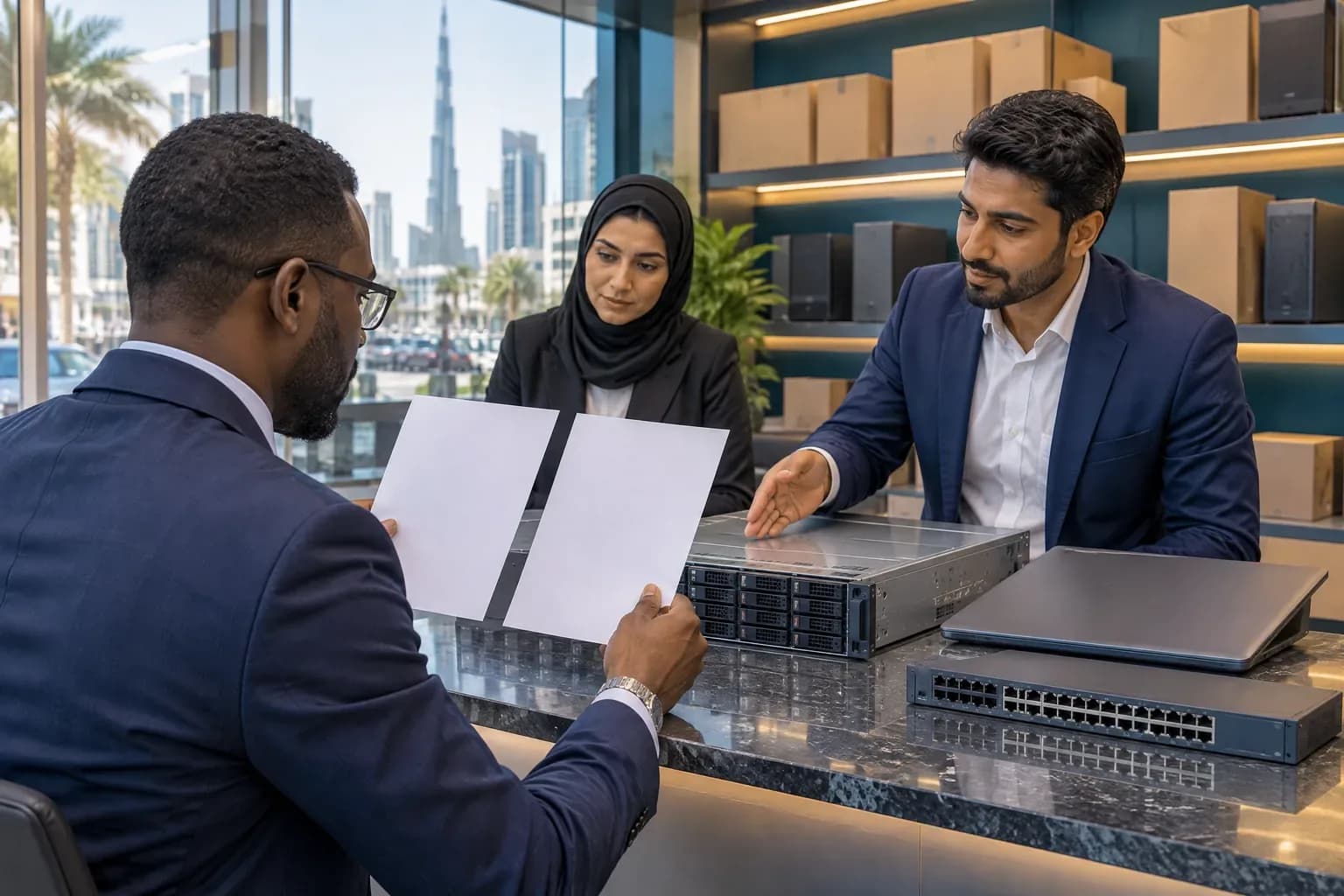
An end-user statement is a signed document from the buyer, and sometimes from the end user, that names the end user, describes the intended use and installation site, and confirms the items will not be re-exported or put to prohibited uses. Some vendors and export authorities publish their own templates. It is normal paperwork for controlled items and some high-value orders, and it should be signed by someone with authority to commit the company.
What happens when an order cannot proceed?
If screening finds a match, or an item would need a licence that cannot reasonably be obtained, the order stops before any payment or shipment. We explain what we can within the limits of the rules, and where an uncontrolled alternative meets the requirement, we may propose it. We do not look for workarounds such as changing descriptions or routing goods through a third country, and requests of that kind are not quoted.
Does any of this slow down everyday orders?
Rarely. Screening runs on every order without the buyer noticing, and the end-use questions come up mainly for security appliances, high-end compute and certain destinations. If your order includes those, expect a short questionnaire at quotation stage rather than a delay later on.
Which red flags should any supplier notice?
- A buyer unwilling to say who will use the equipment or where.
- Delivery to a forwarder or address unrelated to the buyer's business.
- Requests for high-end equipment that does not fit the buyer's stated business.
- Unusual payment routes, third-party payers or pressure to skip paperwork.
- Routing through transit points with no commercial logic for the destination.
A legitimate buyer loses nothing by answering these questions, and answering them early keeps an order moving.
What should buyers do themselves?
Keep records of what you buy, from whom and where it is installed. If you resell, screen your own customers. For anything that may be controlled, take advice from a trade-compliance specialist in your country before you place the order rather than after the goods are held. Ask your bank too: some banks run their own screening on payments for technology goods and may ask questions of their own.
Related reading
- Compliance and order evidence- Our screening policy in full
- Firewalls and network security- Where encryption checks apply
- Computer components and GPUs- High-end accelerators and end use
- Enterprise and government projects- End-user documentation for public buyers
- Encryption export-control basics for networking- On Network Supply Dubai
Related reading

Leave a Comment
Your email address will not be published.